Dr. Kofi Nyarko
Director, CEAMLS; Professor of Electrical & Computer Engineering
Research in computer vision, machine learning and trustworthy AI. Holds four U.S. patents.
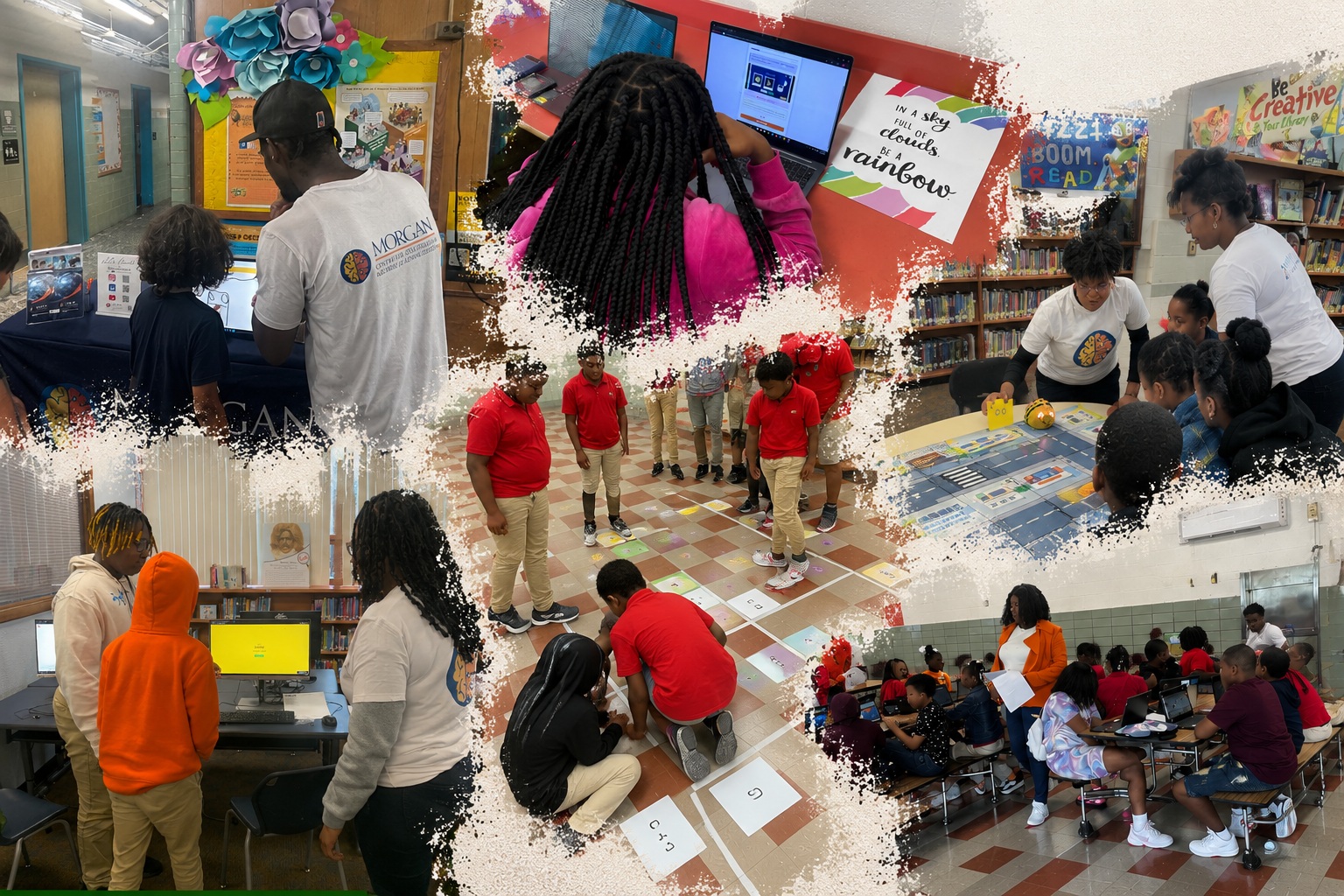
We are the Children's Education in Computing Exploration (CECE) Lab at the Center for Equitable AI & Machine Learning Systems (CEAMLS), Morgan State University. Since 2023 we have taught AI in Baltimore schools and public libraries, including rooms without devices or internet.
Morgan State is a historically Black research university in Baltimore. Our outreach team writes AI lessons, trains teachers and runs student workshops, with a focus on schools that have few devices. The lessons, stories and printables on this site come out of that classroom work.
Director, CEAMLS; Professor of Electrical & Computer Engineering
Research in computer vision, machine learning and trustworthy AI. Holds four U.S. patents.
K–12 Outreach Program Manager
Leads curriculum design and teacher development. Twenty years with Baltimore City Public Schools as a teacher and interventionist.
K–12 Outreach Program Coordinator; Doctoral Researcher
Coordinates the program. Researches digital twins for connected-vehicle safety and AI reliability.
Undergraduate Researcher, Electrical & Computer Engineering
Helps run student workshops and events, and builds demos.
Undergraduate Researcher, Electrical & Computer Engineering
Helps deliver hands-on AI activities and supports students at CEAMLS events.
Figures from the K–12 AI Curriculum Development Project, September 2025 – June 2026, reported to the Maryland Center for Computing Education.
| Figure | What it counts |
|---|---|
| 250 students | Students our team taught directly, in schools, libraries and summer camp. |
| 2,000+ students | Students reached through the teachers we trained. |
| 50 teachers | AI Teacher Fellows from 12 schools who took part in the 25-hour PD program. |
| 30 lessons | Classroom lessons designed by those Fellows. |
| 14 sites | 12 schools and 2 public libraries. |
| 38% → 85% | Student AI comprehension on our pre/post assessment, before and after the lessons. |
| 2.7 → 3.9 | Teacher confidence in teaching AI, out of 5, across the PD series. |
| 80% and 78% | Stakeholders who said the DEAR model could be adapted for future lessons (80%) and that culturally responsive design improved access (78%). |
| 4 of 4 | Student engagement during hands-on activities, on our classroom observation rubric. |
The 38% to 85% result comes from a pre/post assessment of 175 students in grades 4 and 5 at Title I primary sites, reported in the project's final report to the Maryland Center for Computing Education (2026). The assessment, surveys and observation rubric are in our evaluation toolkit.
"I pulled a unit on a Monday and taught it by Thursday. My students had the most engaged discussion I have seen all year, about AI and about real-world consequences."
"I used to think AI was only for college students or engineers. The activities here showed me that I can train my own image classifier, it took about 20 minutes and I was completely hooked."
Email k12ceamls@morgan.edu. We answer within 5 school days.
To bring the program to your school or library, use the request form. Research papers are listed on our research page.
CEAMLS, Morgan State University, 1700 East Cold Spring Lane, Baltimore, MD 21251.